- coordinator@rohanengg.net
- +91 33 45080500

Rohan Engineering Enterprise is one of the microsilica manufacturers in India known for controlling the entire production process, from raw material recovery to the final densified product. We supply microsilica to construction companies, RMC plants, and refractory industries across India and abroad.
Most microsilica suppliers in India buy their equipment or their material from a third party. We do not. We are the sole designer and manufacturer of the Densification System in India, and we also design Gas Cleaning Plants that recover raw microsilica at source. This gives us direct control over quality, consistency, and supply, something a trading company simply cannot offer.
Request live Microsilica pricing or download our full product specification sheet in just one click.
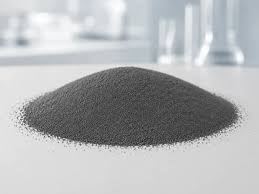
Microsilica is a fine mineral by-product of the ferrosilicon and silicon metal industry. During smelting, quartz is reduced with coal and iron inside an electric arc furnace at around 2000°C. A portion of the silicon escapes as gas, oxidises in the air, and condenses into extremely fine particles of amorphous silica.
These particles are 50 to 100 times finer than ordinary cement. This fineness is exactly why microsilica works so well as a concrete admixture. It fills the microscopic gaps between cement particles, reduces porosity, and produces a denser, stronger final material.
As collected from the baghouse filter, microsilica exists in a loose, un-densified state. In this form it is difficult to store, transport, and dose accurately. This is where densification becomes essential.
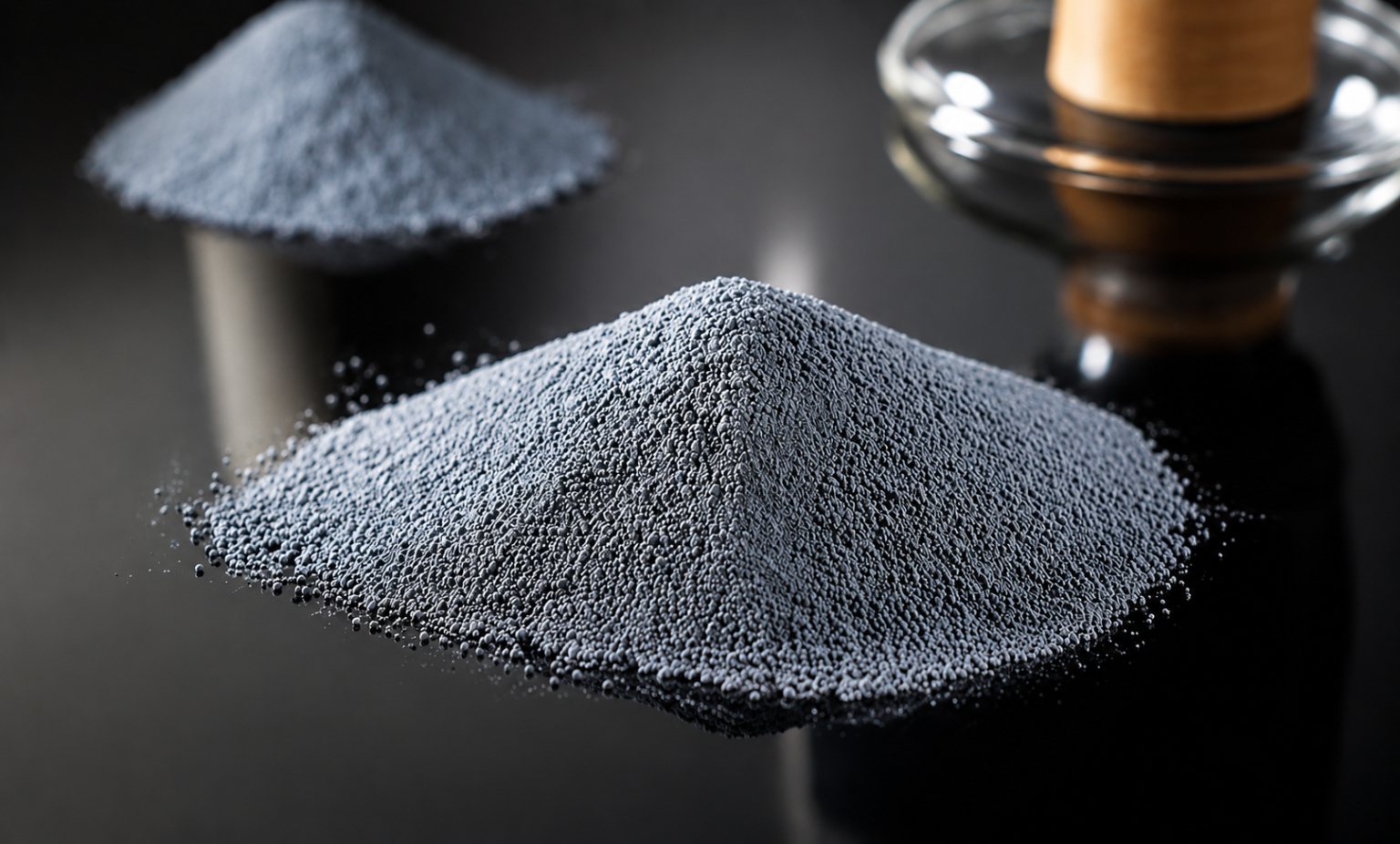
Rohan Engineering Enterprise is a densified microsilica manufacturer with full ownership of the technology behind the process. As the sole designer and manufacturer of the Densification System in India, we do not depend on outside vendors for this critical equipment. We build it, install it, and operate it.
This matters because densification is what turns raw microsilica into a usable, tradeable industrial product. A manufacturer that controls this stage can guarantee density, purity, and consistency in a way that a reseller cannot.
Request live Microsilica pricing or download our full product specification sheet in just one click.
Our densification system for microsilica increases the bulk density of raw material from around 130 to 200 kg per cubic metre up to 400 to 720 kg per cubic metre. This is achieved by aerating and tumbling the material inside a purpose built silo. Electrostatic charges build up between the fine particles and cause them to agglomerate into a denser, more stable form.
Once the material reaches the target bulk density, it moves to packaging or bulk loading. The entire cycle, from raw material intake to bagged product, runs through equipment we have designed ourselves.
Buyers often ask about the difference between densified and un-densified microsilica before finalising a supplier. Here is a straightforward comparison.
| Parameter | Un-densified Microsilica | Densified Microsilica |
|---|---|---|
| Bulk Density | Around 130 to 200 kg/m³ | 400 to 720 kg/m³ |
| Storage | Prone to bridging and compaction in silos | Stable and space efficient |
| Transportation | Difficult to move in bulk, higher freight cost per tonne of usable material | Easier to load, transport, and unload |
| Handling | Fine dust, higher explosion and inhalation risk | Safer to handle on site |
| Dust Generation | High, requires strict containment | Significantly reduced |
| Dosing Accuracy | Inconsistent due to loose, aerated form | Reliable and consistent for batching |
| Suitable Applications | Limited to controlled industrial settings | Concrete, RMC, refractory, and general construction use |
For nearly all commercial construction and RMC applications, densified microsilica is the practical and safer choice, which is why our densification capability sits at the centre of what we offer.
consistent output. We have designed and delivered densification systems for major clients including Bhutan Carbide and Chemicals, Electrosteel Castings Limited, Srikalahasthi Pipes Limited, and Gajanan Ferro, with installations across Bhutan, Andhra Pradesh, and West Bengal.
Each plant we build includes:
Because we design and install this equipment ourselves, our microsilica densification plant in India reflects years of direct operating experience, not just theoretical engineering.
Request live Microsilica pricing or download our full product specification sheet in just one click.
Before microsilica can be densified, it has to be recovered from the source. Rohan Engineering Enterprise also designs and manufactures fully functional Gas Cleaning Plants, which capture microsilica from furnace emissions during silicon and ferrosilicon production.
A gas cleaning plant for microsilica recovery works by drawing furnace off-gas through a baghouse filter system, where the fine amorphous silica particles are captured before they can escape into the atmosphere. This recovered material becomes the raw input for our densification process.
By owning both the Gas Cleaning Plant and Densification System stages, Rohan Engineering Enterprise controls the full manufacturing chain for microsilica. This is a meaningful distinction. Many companies in this market only trade finished material. We manufacture it from the point of recovery through to the final packed product.
We supply microsilica across a range of purity grades to match different industry needs, based on SiO2 content and intended application.
| Parameter | Typical Value |
|---|---|
| SiO2 (Silicon Dioxide) | 82% to 94%, depending on grade |
| Moisture | 2% max |
| Loss on Ignition (LOI) | 2% typical |
| Oversize | 2% max |
| Specific Surface (BET) | Minimum 18 m² per gram |
| Bulk Density | 250 to 700 kg per cubic metre, based on densification level |
Our production process conforms to ASTM C1240 and EN 13263:2005 standards.
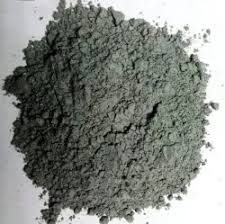
Grade 85D microsilica carries a minimum SiO2 content of 85 percent. This grade is widely used in general construction applications where reliable pozzolanic activity and cement replacement performance are required, without the higher purity demands of specialised applications.
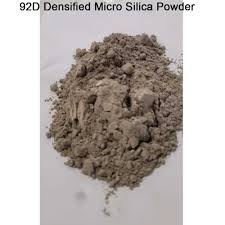
Grade 92D microsilica carries a higher SiO2 content, making it suitable for high performance concrete applications that call for greater strength gain and lower permeability. This grade is often specified for structures exposed to aggressive environments, such as marine works and below ground structures.
We also supply amorphous silica for buyers who require material outside the standard construction grade range, including refractory and specialised industrial applications.
Microsilica is one of the most effective admixtures available for improving concrete performance. Adding it to a mix design delivers higher compressive and flexural strength, lower permeability, reduced water absorption, and better long term durability. Below are the specific applications where our microsilica is most widely used.
High performance concrete needs a denser microstructure than standard mixes can achieve on their own. Microsilica particles fill the spaces between cement grains, which reduces porosity and increases both compressive and flexural strength. This makes it a standard admixture for high rise structures, precast elements, and prestressed concrete components where strength and long term performance are critical.
As a concrete strength admixture, microsilica typically improves compressive strength when dosed between 8 and 15 percent by weight of cement. The exact dosage depends on the application. High strength structural columns generally use 10 to 15 percent, while flatwork applications use around 10 percent. Because our material is densified, it doses accurately and consistently across every batch, which matters when strength targets are non-negotiable.
Request live Microsilica pricing or download our full product specification sheet in just one click.
RMC plants across India and abroad use our microsilica to produce high strength, low permeability concrete at scale. Ready mix operations depend on precise, repeatable dosing through automated batching systems, and un-densified material simply does not flow or measure consistently in this kind of equipment.
Densified microsilica solves this problem directly. It flows predictably through silos and screw conveyors, doses accurately batch after batch, and integrates into existing RMC batching lines without requiring special handling equipment. For RMC operators supplying large infrastructure projects, this consistency translates directly into fewer rejected loads and more predictable mix performance.
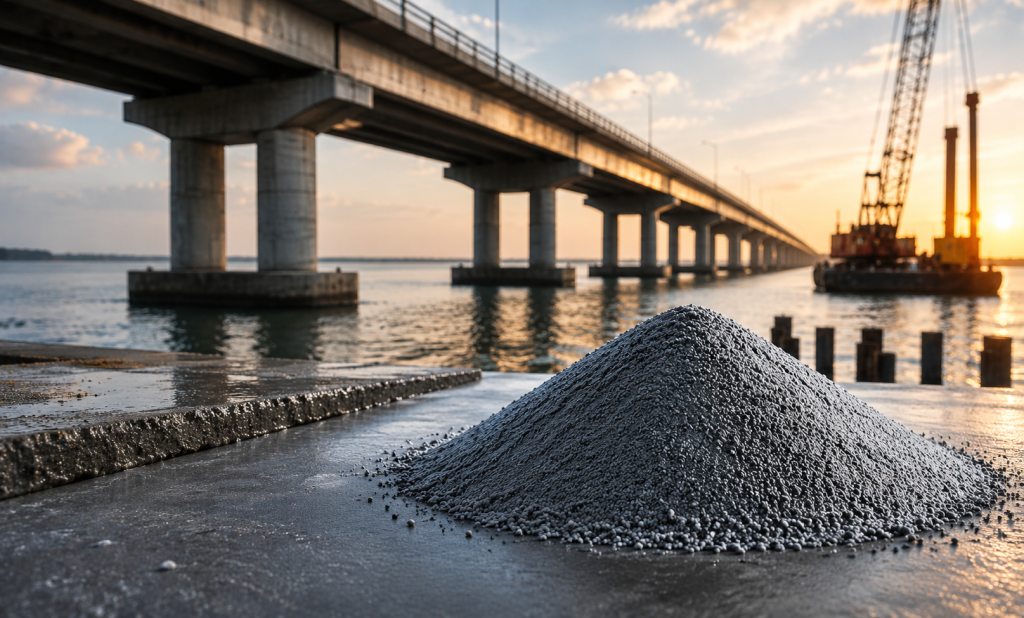
Marine and below ground structures face constant exposure to water, chloride ions, and sulphates. Microsilica reduces the permeability of concrete, which slows the rate at which chloride ions can reach reinforcing steel and cause corrosion. It also improves resistance to sulphate attack and helps prevent cracking caused by alkali-silica reaction. These properties make microsilica a standard specification for bridges, piers, jetties, shipping yards, ports, and foundations exposed to aggressive groundwater.
Shotcrete applications, particularly in tunnel construction, require concrete that can be sprayed and will hold its shape and strength quickly after application. Microsilica improves cohesion in the mix, reduces rebound loss during spraying, and speeds up early strength gain, all of which are important in tunnel linings and underground support structures.
Refractory materials operate under extreme heat and constant chemical stress inside furnaces and metallurgical equipment. Microsilica improves the density, heat resistance, and chemical resistance of refractory linings, helping them withstand repeated thermal cycling without breaking down.
Because our microsilica is densified and available across multiple SiO2 grades, refractory manufacturers can select material suited to their specific formulation requirements, whether that calls for standard grade material or higher purity amorphous silica.
Large construction and industrial projects need a microsilica supplier in India that can deliver consistent volume without delay. As a bulk microsilica supplier, we offer:
Whether you need a single bulk shipment or an ongoing supply arrangement for ongoing RMC production, our team can structure delivery around your project schedule.
Microsilica price in India varies depending on several factors, including grade and SiO2 content, bulk density, packaging format, order quantity, destination, and logistics costs. Because these variables differ from project to project, we do not publish a fixed price list.
The most accurate way to get pricing is to share your grade requirement, quantity, delivery location, and packaging preference with our team. We will provide a quote based on your specific project needs.
Request live Microsilica pricing or download our full product specification sheet in just one click.
Rohan Engineering Enterprise supplies microsilica beyond Indian borders, with completed densification plant installations in Bhutan and material supply supporting international buyers. As a microsilica exporter from India, we handle the packaging and logistics considerations that come with cross border shipment, including jumbo bags suited to long distance transport and documentation support for international orders.
Rohan Engineering Enterprise is based out of Kolkata, and our work as a microsilica manufacturer and supplier extends across West Bengal, eastern India, and pan India markets. Our installations and project history, including work with clients such as Electrosteel Castings Limited in Andhra Pradesh and Bhutan Carbide and Chemicals in Bhutan, reflect a supply reach that goes well beyond our home base in eastern India.
Rather than relying on generic claims, here is what actually differentiates us as a microsilica manufacturer in India.
Our microsilica is used across a wide range of industries and structure types, including:
Request live Microsilica pricing or download our full product specification sheet in just one click.
Microsilica is mainly used as a cement replacement or additive in concrete to improve strength, durability, and resistance to water and chemical attack. It is also used in refractory linings for furnaces and industrial equipment.
Densified microsilica is raw microsilica that has been processed to increase its bulk density, typically from around 130 to 200 kg per cubic metre up to 400 to 720 kg per cubic metre. This makes the material easier and safer to store, transport, and dose accurately.
Un-densified microsilica is the raw form collected directly from the baghouse filter. It has low bulk density and generates significant dust, which makes it harder to store and transport safely. Densified microsilica has a controlled, higher bulk density, which improves storage, handling, and dosing consistency.
Both Grade 85D and Grade 92D are used in concrete, with the choice depending on the strength and durability requirements of the project. Higher SiO2 grades like Grade 92D are typically specified for high performance and aggressive environment applications.
Grade 85D microsilica has a minimum SiO2 content of 85 percent and is commonly used in general construction applications requiring reliable pozzolanic activity.
Grade 92D microsilica has a higher SiO2 content than Grade 85D and is typically used in high performance concrete applications that require greater strength and lower permeability.
RMC plants use microsilica to produce high strength, low permeability concrete at scale. Densified microsilica is preferred in RMC operations because it doses accurately and consistently through automated batching systems.
Microsilica particles are far finer than cement, which allows them to fill microscopic gaps between cement grains. This reduces porosity, increases density, and improves both compressive and flexural strength.
Microsilica price depends on grade, SiO2 content, bulk density, packaging, quantity, and delivery location. Contact our team with your project details for an accurate quote.
Yes. We offer bulk tanker loading in addition to standard 25kg and 700kg bag packaging, depending on your project requirement.
Yes. We supply microsilica internationally, including completed densification plant installations and material supply in Bhutan.
The right manufacturer depends on your project needs, but Rohan Engineering Enterprise stands out as the sole designer and manufacturer of the Densification System in India, giving us direct control over quality and consistency that trading companies cannot offer.
We are based in Kolkata and supply microsilica across West Bengal, eastern India, and pan India, with additional project experience in Bhutan.